 | WEEKLY EDITION Issue 003 16 November 2026 |
Ten things in AI worth your time. |
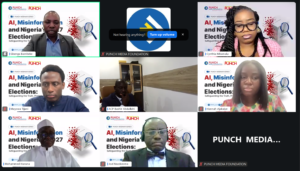
IN LAST WEEK’S POLL, WE ASKED: A voice note says the election has been postponed. What would you do first? Check INEC’s official channels: 70%. Ask family or friends: 20%. Forward it to warn others: 0%. Wait for radio or TV news: 10%. Notably, the responses suggest that most respondents would turn to official sources to verify election-related information before sharing it  01 The Big Story Schools & AI access If schools say no to AI, should students lose Google Search?A new policy puts school administrators in a difficult position. Google says it will switch off Search and its AI tools by default for school-managed K–12 accounts until administrators enable them. But schools wanting traditional Google Search without built-in AI features will not have that option under the announced changes. Critics fear schools are being pushed into accepting AI; Google says its new controls give educators more choice. This concerns school-managed accounts, not everyone’s Google Search. For Nigerian parents and teachers, the wider question is familiar: who should decide when children use AI, and on what terms? |
 Duration: 00:03:21 02 The Watch The energy cost of AI Who really pays for a “free” AI answer?The hidden energy and infrastructure costs behind the chatbot. Typing a question into an AI tool can feel free and effortless. In this short Deutsche Welle video, Marta Grudzinska looks at the electricity-hungry data centres, computing infrastructure and investment behind those answers. AI systems are becoming more efficient, yet greater demand can still increase total energy use and spending. The video offers a useful question for consumers and businesses: when the visible price is zero, what costs are hidden elsewhere? |
THE PAIR CHECK When someone says AI is behind a cyberattack, ask: Who investigated it? What evidence was published? Is the figure a measured finding, an expert opinion or a forecast? |
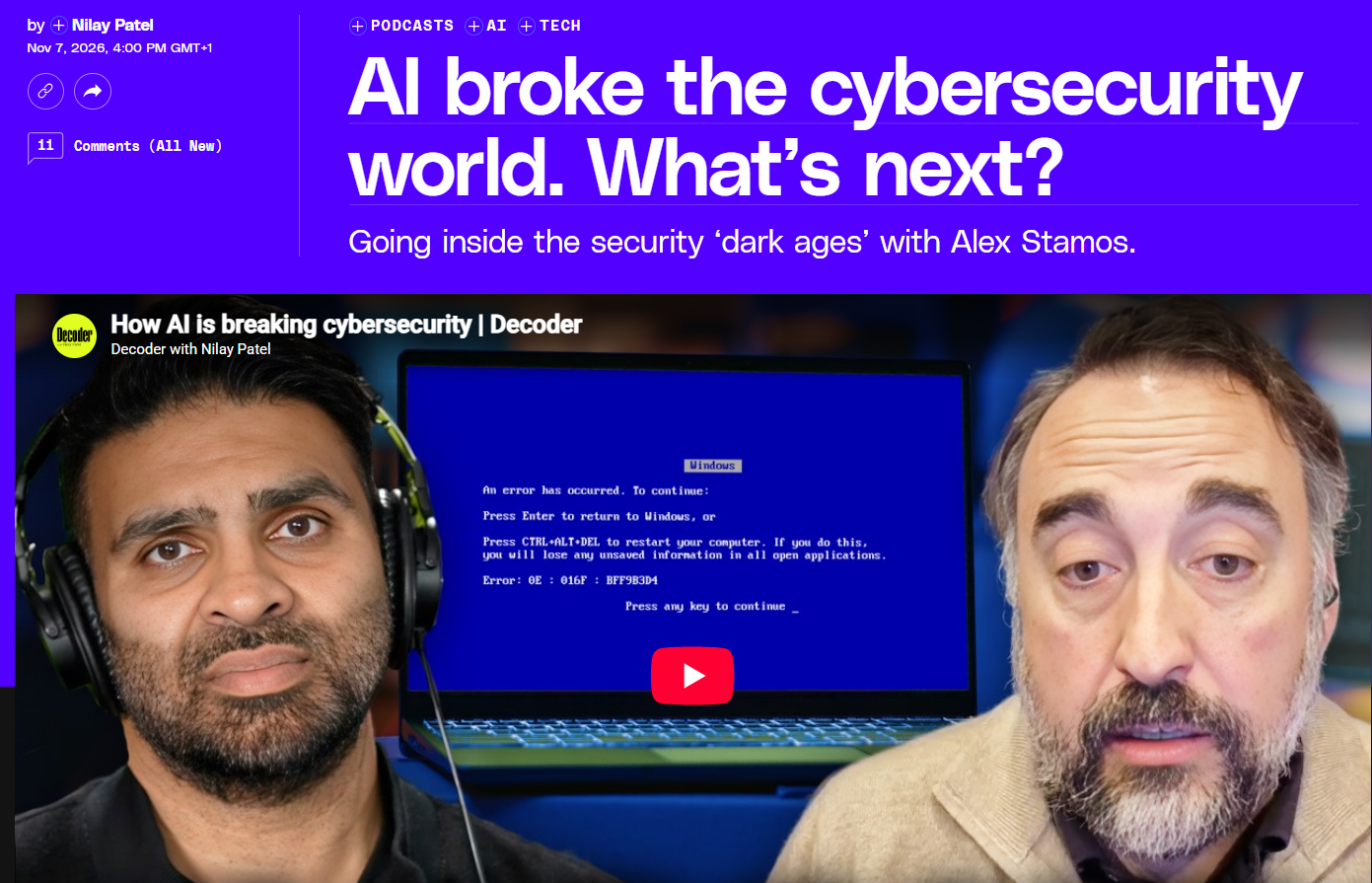 Duration: 01:03:43 03 The Listen AI & cyber defence AI is changing cybersecurity. Are defenders ready?A security expert explains why familiar safeguards may not be enough. In this episode of Decoder, host Nilay Patel speaks with cybersecurity specialist Alex Stamos about AI-assisted hacking, exposed software weaknesses and the pressure on defenders to respond faster. Stamos argues that organisations may need to use AI for security testing and repairs while keeping people in control. His warnings are an expert assessment, not proof that every attack now uses AI. Listen for the practical challenge: how can a small team defend systems as attackers gain more powerful tools? |
 04 The Read AI & public services Can the UAE’s AI-government plans teach Nigeria anything?Useful public services need connected systems, not just clever chatbots. Abu Dhabi hopes to redesign public services around AI by 2027, and PUNCH journalist Justice Okamgba examines what Nigeria could learn. Its TAMM platform brings many services into one place, but the more important lesson lies underneath: digital identity, linked records, payments and agencies that communicate with one another. The UAE’s plans to automate internal operations remain targets, not finished achievements. For Nigeria, the question is less “Which chatbot should government buy?” and more “Can citizens complete a service without moving between disconnected offices?” ALSO WORTH READING | Can AI estimate a teenager’s age? Meta says it is expanding AI-based age detection to place suspected underage users in more protective account settings. Parents may welcome the safeguards, but mistakes and appeal processes matter too. |
 05 The Evidence Cybercrime & research How much is AI changing Africa’s cybersecurity risks?A new industry report raises questions about digital fraud and the cost of protection. Heirs Technologies’
Africa’s Cybersecurity Landscape 2026 examines threats and security costs
across Nigeria, Kenya and South Africa. It reports growing concern about
AI-assisted phishing, impersonation and other cybercrime, alongside the burden
of foreign-currency-priced security tools. The organisation says AI features in
more than half the cybercrime cases it references, but the publicly available
summary does not establish how those cases were selected. The useful lesson is
twofold: businesses need better defences, and readers should check the method
behind dramatic statistics before repeating them. |
Before a school introduces an AI study assistant, which safeguard should it prioritise?
Choose one answer. Your vote is submitted here without leaving the page.
 06 The Tool AI-powered creativity Make, edit and animate images with ChatGPT’s new Images 2.6One creative task to try this week. OpenAI’s Images 2.6 adds
faster image generation, more consistent editing and ways to turn images into
animated GIFs. Designers, small businesses and students can use it to explore
ideas before committing to production. Try this safe task: “Make a simple
poster for a community reading day, using red and blue, with space for the date
and venue.” Then inspect the text, layout and details yourself. The company
says Images 2.6 is available across ChatGPT subscription tiers, although usage
limits and API charges differ. |
 07 The Life Teenagers & independent thinking Are AI study assistants doing too much of our thinking?A psychologist asks what teenagers might lose when answers are always available. In an opinion article for The Guardian, psychoanalyst Robin Kirman argues that constant AI guidance may leave young people with fewer opportunities to develop independent judgement. This is an argument based on professional perspective, not experimental proof that AI tutoring makes teenagers think less. Parents and teachers can still take something practical from it: ask learners to explain an answer in their own words, attempt a task without AI and challenge suggestions that sound confident but may be wrong. |
THE PAIR HABIT Before asking AI to solve a question, write your own answer in two sentences. Then use the tool to challenge—not replace—your reasoning. |
 08 The Initiative Girls building with AI More than 700 ideas: FCT schoolgirls build with AIAbuja students take on problems they recognise in their communities. Students from 16 public secondary schools in Abuja showcased more than 700 AI-related projects tackling healthcare, digital safety, education and climate resilience, according to programme organiser AfroTechxcel. Founder Emerald Akhaumere says more than 772 girls participated, with support from human mentors. Some teams built tools such as community bots, school registries and warning systems. These are promising student projects, not 700 proven services in use. The transferable lesson is striking: young people can learn technology by solving problems they actually know, with teachers and mentors guiding the work. |
 09 The Opportunity Board Public-interest tech fellowships Start a free AI course through Google’s new Africa hubLearn at your own pace, even with patchy data. Mozilla Foundation is inviting Letters of Intent for ten 2027–2028 fellowships focused on public-interest technology, including AI, shared digital infrastructure and community control. The Independent track offers a total package of up to US$125,000; the Embedded track offers US$100,000, with the Slum & Rural Health Initiative in Nigeria among host organisations. These packages include stipends and project budgets, not unrestricted cash. Applicants should review the relevant track and submit by 17 December 2026, 11:59 p.m. Pacific time (18 December, 8:59 a.m. Lagos). |
 10 The People Offline maternal-health innovation Louis Echefu: building a pregnancy app that works offlineWhat if a useful health tool did not need an internet connection? Nigerian cloud engineer and AI specialist Louis Echefu helped develop FetalKickApp, a mobile tool for recording fetal movements even when connectivity is unreliable. An early four-week study involving 25 pregnant women at the University of Port Harcourt Teaching Hospital explored how usable the app felt to participants. It did not establish that the app improves pregnancy outcomes, and a change in fetal movements still needs prompt medical attention. Echefu’s team hopes to add Hausa, Yoruba and Igbo versions; these remain plans. His story shows why accessibility matters as much as sophistication. |
Published by PUNCH Media Foundation, the development arm of PUNCH, Nigeria’s Most Widely Read Newspaper. PUNCH Place, KM 14 Lagos–Ibadan Expressway, Ogun State, Nigeria. punchfoundation.org · punchng.com |